
Categories
Home Buying TipsPublished July 22, 2026
Buyer Closing Costs in Blaine, MN: What to Expect in 2026

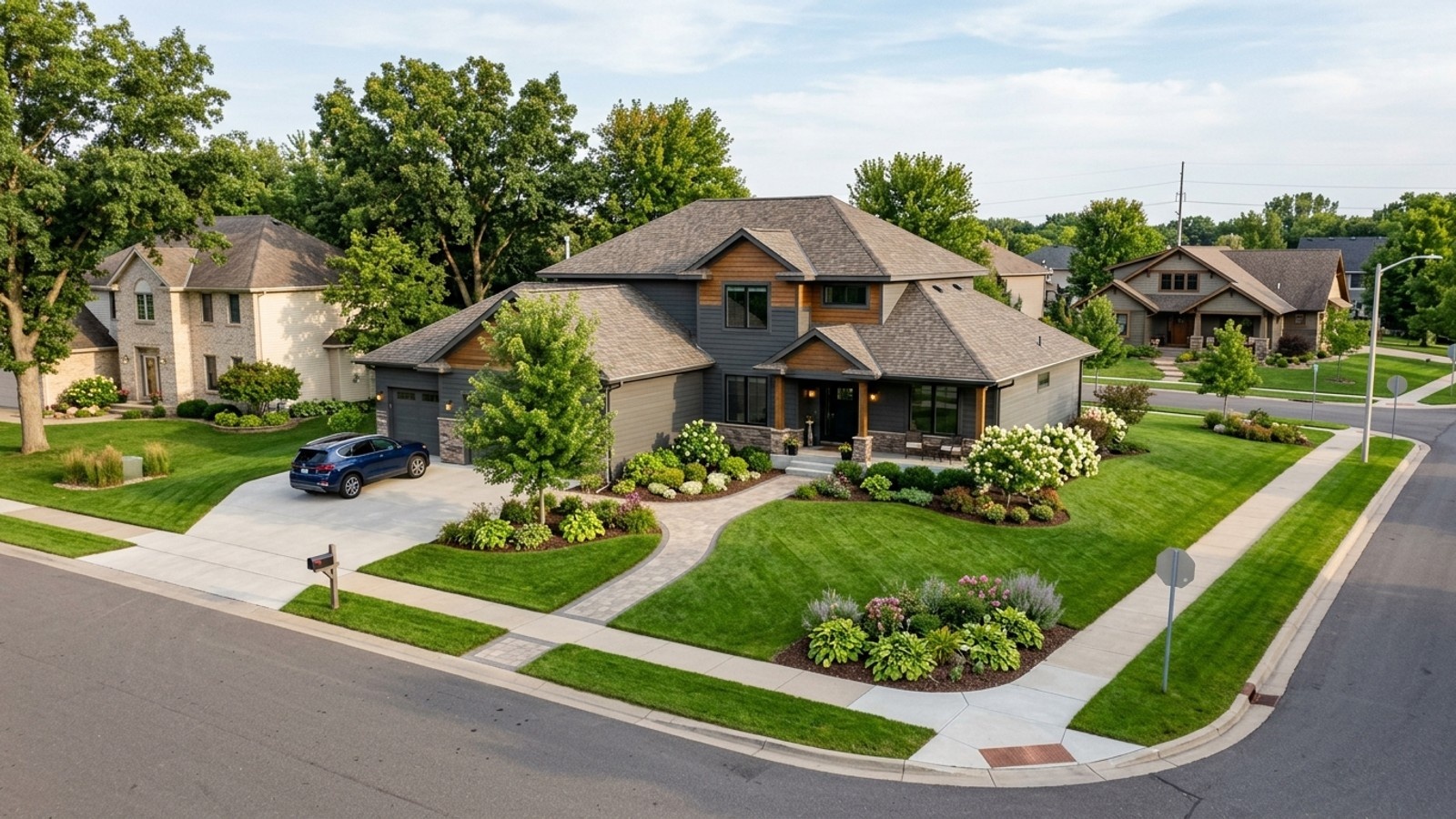
The median home price in Blaine, MN sits around $384,000 this summer. Buyers focused entirely on scraping together a down payment often get a surprise when it is time to sign the final paperwork. While certain homebuyer programs in Blaine offer financial assistance, closing costs still run thousands of dollars above the down payment and require cash at the closing table.
These fees cover the administrative, legal, and lending steps required to transfer a property into your name. Knowing how much to set aside keeps your budget intact and prevents last-minute scrambles before you get the keys to your new home.
Understanding the Basics of Closing Costs in Minnesota
Every real estate transaction involves third-party services, taxes, and lender requirements that generate fees. Buyers and sellers both pay a portion of these expenses when finalizing a sale in the Twin Cities metro. The exact total varies based on the loan type, the property's price, and the specific vendors chosen.
Buyers typically handle the costs tied to securing their mortgage and establishing ownership. Sellers take on the expenses related to clearing their existing debt and transferring the title. Understanding this divide helps you read your loan estimates accurately.
Down Payments vs. Closing Costs
Your down payment goes directly toward the equity of the home, lowering the principal balance of your loan. Closing costs are separate service fees and prepaid taxes that do not build equity. You should budget for both independently when preparing to buy.
Lenders outline these figures in a document called the Loan Estimate within three days of a mortgage application. This form clearly separates the down payment from the estimated closing fees. Reviewing this document helps buyers verify they have enough liquid funds to close.
How Buyer and Seller Costs Differ
A buyer's expenses revolve around the mortgage process. These include appraisals, loan origination charges, and setting up an escrow account for future property taxes. Buyers also pay to record the new deed with Anoka County.
Sellers face a different set of charges, usually deducted straight from their profit. They pay the real estate agent commissions, which make up the bulk of their closing bill. Sellers also cover the Minnesota State Deed Tax to legally transfer the property.
Average Buyer Closing Costs in Anoka County
Buyers in Blaine generally pay between 2% and 5% of the home's purchase price in closing costs. On a median-priced $384,000 home, that translates to roughly $7,680 to $19,200. The wide range comes down to how a buyer structures their loan and the timing of their property tax payments.
Homes in the Twin Cities metro area sometimes carry slightly higher closing costs than rural parts of the state. Local property tax rates and county-specific recording fees push the baseline up. Buyers should ask their lender for a precise estimate early in the process.
Are Costs Always Three Percent of the Purchase Price?
The 3% mark is a common rule of thumb, but it is not a fixed rate. A buyer purchasing points to lower their mortgage interest rate will push their total well past 3%. Conversely, a buyer making a massive down payment with minimal loan fees might pay closer to 2%.
The time of year also shifts the final percentage. Buyers closing in certain months must prepay a larger chunk of their annual property taxes into their escrow account. This upfront tax collection inflates the cash needed at closing without changing the actual service fees.
Estimating Costs for Common Blaine Price Tiers
To visualize the math, consider a few standard price points in the current market. On a $300,000 townhome, a 3% estimate puts closing costs around $9,000. For a $400,000 single-family house, that same 3% average equals $12,000.
As the purchase price climbs, the total dollar amount for closing costs rises, but the percentage often shrinks slightly. On a $500,000 property, costs might sit around $14,000, while a $600,000 home could see fees around $16,500. Fixed costs like appraisals stay the same regardless of the home's value.
Breaking Down the Fees Buyers Pay at the Table
The final Closing Disclosure lists every charge down to the penny. These line items fall into a few distinct categories: loan origination, title work, government taxes, and prepaid expenses. Knowing what each term means makes the final document much easier to read.
Some of these fees are fixed by state law or county regulation. Others are set by private companies and vary from one transaction to the next.
Lender and Origination Charges
Lenders charge fees to process, underwrite, and fund a mortgage. Origination fees typically cost between 0.5% and 1% of the total loan amount. You will also see charges for pulling your credit report and ordering an appraisal.
The appraisal fee usually runs between $400 and $600 in the Blaine market. Lenders require this step to confirm the home is worth the agreed-upon purchase price. Some lenders ask buyers to pay for the appraisal upfront rather than rolling it into the final closing table costs.
Title Insurance and Escrow Fees
Title companies handle the physical closing and ensure no one else has a legal claim to the property. Buyers must pay for a lender's title insurance policy, which protects the bank's investment. Buyers also have the option to purchase an owner's title policy to protect their own equity.
Settlement or escrow fees cover the title company's labor for managing the funds and paperwork. These fees are typically split evenly between the buyer and the seller in Minnesota. Expect to see settlement charges ranging from $300 to $600 on your side of the ledger.
Minnesota State Deed Tax and Mortgage Registry Tax
Minnesota levies two specific taxes when real estate changes hands. The seller customarily pays the State Deed Tax, which is based on the home's sale price. Buyers are responsible for the Mortgage Registry Tax.
The Mortgage Registry Tax costs $0.0023 per dollar of the mortgage amount in Anoka County. If you take out a $350,000 loan, this tax adds $805 to your closing costs. Cash buyers skip this tax entirely because it only applies to recorded mortgages.
Prepaids and Escrow Reserves
Lenders require buyers to fund an escrow account to cover future property taxes and homeowners insurance. You will typically need to pay for a full year of homeowners insurance upfront. The lender will also collect two to three months of property taxes to pad the reserve account.
These are not technically fees, as the money belongs to you and pays your future bills. However, they demand a large amount of cash at closing. If the home belongs to a homeowners association, you should also budget for prorated HOA dues.
Customary Splits: Who Pays What in Minnesota
Local customs dictate how certain fees are divided between the two parties. While almost everything in real estate is negotiable, most Blaine transactions follow a standard pattern. Buyers and sellers expect to cover their own respective sides of the process.
Contracts explicitly outline these responsibilities. If you want the seller to deviate from the norm and cover one of your typical costs, your agent must write that into the purchase agreement.
What the Buyer Customarily Covers
Buyers handle all costs related to their financing. This includes the mortgage origination fees, appraisal, credit report, and the Mortgage Registry Tax. The buyer also pays for the lender's title insurance policy and their own property inspections.
Any costs tied to the buyer's future ownership fall on their shoulders. This means funding the escrow account, prepaying insurance, and paying recording fees to Anoka County to register the new deed.
What the Seller Customarily Covers
Sellers take on the costs of marketing the home and transferring a clean title. They pay the real estate agent commissions for both sides of the transaction. The seller also covers the State Deed Tax and any fees required to pay off their existing mortgage.
In Minnesota, it is standard for the seller to pay for the owner's title insurance policy. This policy protects the buyer against future title disputes, and it is a customary seller expense in this market.
How to Lower Your Out-of-Pocket Expenses
Buyers have several avenues to reduce the cash they need to bring to closing. Working with your real estate agent and mortgage broker can uncover savings. Some strategies lower the fees directly, while others shift the burden to the seller or lender.
Planning ahead gives you the most leverage. Once the contract is signed and the loan is locked, it becomes much harder to alter the final numbers.
Asking the Seller for Concessions
A buyer can ask the seller to pay a portion of their closing costs as part of the initial offer. This is known as a seller concession or seller credit. In a market where homes are sitting on the market for an average of 23 days, some sellers will agree to a credit to secure a solid offer.
Loan programs limit how much a seller can contribute. Conventional loans typically cap seller concessions at 3% to 6% of the purchase price, depending on the down payment size. FHA loans allow sellers to contribute up to 6% toward the buyer's costs.
Shopping for Lenders and Title Companies
Not all closing fees are set in stone. Buyers should compare Loan Estimates from at least three different lenders to find the best origination fees. Some lenders offer lender credits, where they cover your closing costs in exchange for a slightly higher interest rate.
Buyers also have the right to choose their title company. While many buyers just use the company suggested by their agent, shopping around can save a few hundred dollars on settlement fees.
Estimating Costs for Cash Buyers
Purchasing a home with cash eliminates all lender-related fees. Cash buyers do not pay origination charges, appraisal fees, or the Mortgage Registry Tax. They also skip the requirement to fund an escrow account for taxes and insurance.
A cash buyer in Blaine typically pays less than 1% of the purchase price in closing costs. Their main expenses are their half of the title settlement fees, recording fees, and any optional property inspections.
Frequently Asked Questions
How much should I expect to pay in buyer closing costs for a typical home in Blaine, MN?
You can expect to pay between $7,680 and $19,200 for a typical home here. With the current median sale price sitting around $384,000, most buyers fall right in the middle of that range. Planning for at least $11,500 gives you a safe baseline before you receive official lender estimates.
Are there any specific Anoka County or Blaine city fees buyers have to pay at closing?
Yes, Anoka County charges a flat recording fee, which is currently $46 per document. You will also pay the Minnesota Mortgage Registry Tax directly to the county, calculated at $0.0023 per dollar borrowed. The city of Blaine itself does not levy a municipal transfer tax on top of the county and state rates.
What closing cost assistance programs are available for first-time homebuyers in Blaine?
First-time buyers can look into Minnesota Housing Finance Agency (MHFA) programs. Their Deferred Payment Loan offers up to $16,500 for down payment and closing costs to eligible buyers. Income limits apply, and the home's purchase price must fall under the state's current $400,000 cap for the Twin Cities region.
Is it currently common to ask sellers to cover buyer closing costs in the Blaine real estate market?
It depends entirely on the specific property and its time on the market. With homes selling in an average of 23 days and the sale-to-list ratio slightly over 100%, sellers hold the advantage on newly listed homes. You will have much better luck asking for concessions on a property that has sat active for more than a month.
Which buyer closing fees are non-refundable if my Blaine home purchase falls through?
The appraisal and property inspection fees are almost always non-refundable. Inspectors and appraisers perform their work upfront and require payment regardless of whether the deal closes. This usually means risking $800 to $1,200 out of pocket during the contingency period.
When do I need to wire the exact funds for my closing costs before signing on a house in Blaine?
Title companies typically require the final wire transfer to arrive at least 24 hours before your scheduled signing appointment. You will receive the final, exact dollar amount on your Closing Disclosure three business days prior to closing. Always verify wire instructions over the phone with your title officer to prevent fraud.

Ann Breuer
Broker Associate, SRES, Team Owner | First Choice Realty Solutions • REAL Broker, LLC. | PLACE
or another way