
Categories
Moving & Local ResourcesPublished July 22, 2026
A Look at the History of Champlin, MN for Today's Homebuyers

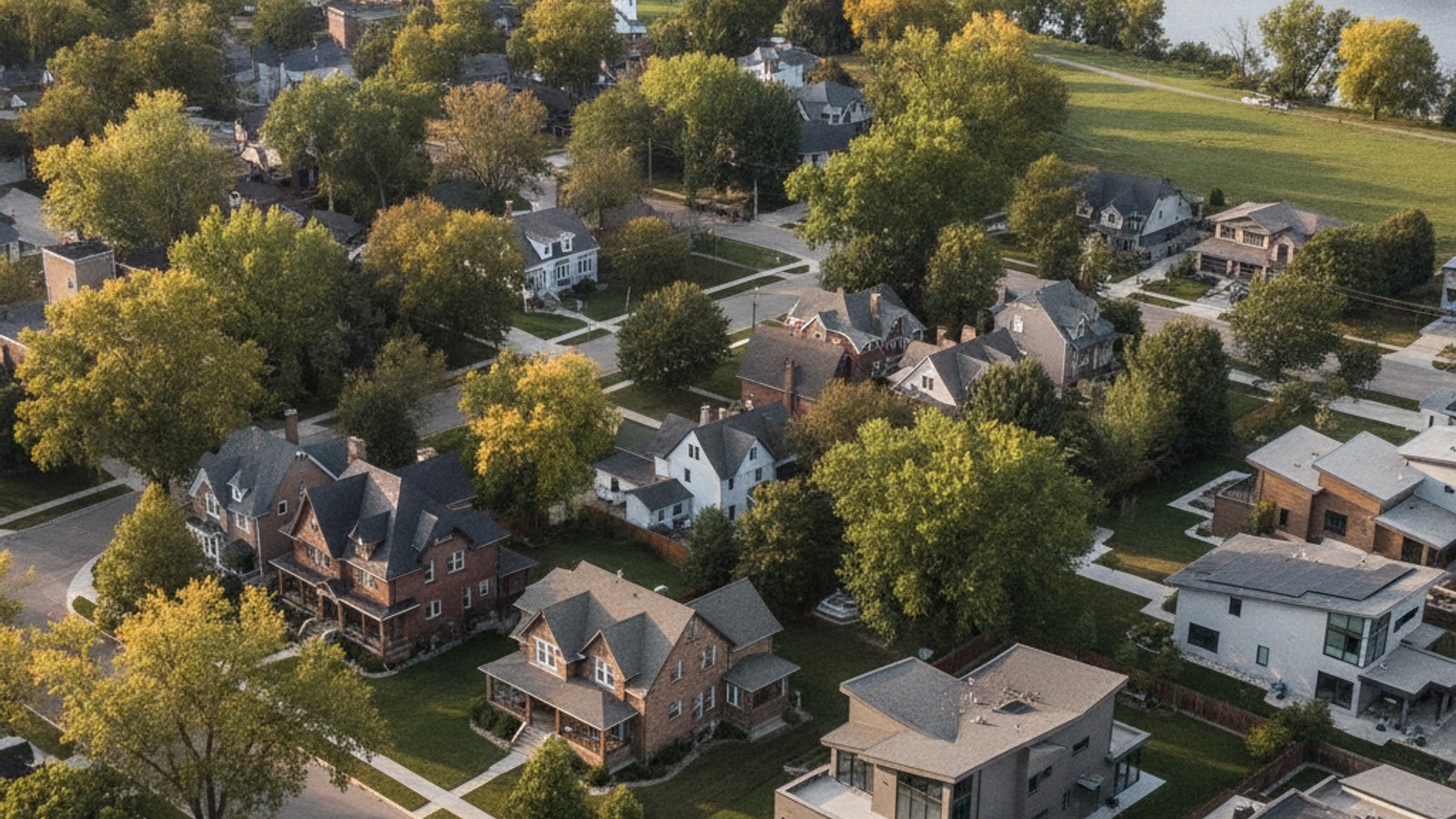
Champlin sits directly on the west bank of the Mississippi River, bordered by Hennepin and Anoka counties. The area's layout and development are tied directly to this major waterway, which provided the foundation for early trade and transportation. Today, the city operates as a major suburb within the Minneapolis-Saint Paul metropolitan area, offering a mix of historic sites and modern residential neighborhoods. Buyers often consult the best real estate agent in Champlin to search these local properties.
The history of Champlin, MN provides context for the city's current real estate landscape, from the older homes near the river to the newer developments further inland. The transition from a 19th-century trading post to a third-ring suburb shaped the local housing inventory available to buyers today.
Early Settlement Along the Mississippi River
In 1852, the first permanent settlers established a presence in what is now Champlin. The area's proximity to the Mississippi River made it a natural location for trade, milling, and transportation.
Long before official township incorporation, Native American tribes utilized the riverbanks for seasonal camps and trade routes. European exploration recorded in the late 17th century included Father Louis Hennepin, who traveled through the region and mapped the local waterways. The city eventually took its name from Stephen Champlin, a United States Navy commodore.
Early river town transportation relied entirely on horse-drawn wagons and ferries crossing the Mississippi River. These ferries connected the west bank to Anoka, creating a steady flow of goods and travelers. This river traffic laid the groundwork for the town's initial commercial center along the water.
Agriculture and milling soon followed the initial trading posts. Settlers utilized the local waterways, including Elm Creek, to power small mills and support farming operations. The early local economy centered on these resources, establishing a small but stable population throughout the late 1800s.
Growing From a River Outpost to a Suburban Hub
The population of Champlin saw major shifts during the mid-20th century as the Minneapolis-Saint Paul metro area expanded outward. New highway infrastructure turned the former agricultural community into a residential suburb for downtown commuters.
The downtown business district evolved alongside this population growth. Early housing styles, primarily pioneer cabins and small farmhouses, were gradually replaced or surrounded by mid-century single-family homes. The local economy transitioned from farming to retail and professional services to support the influx of new residents.
Modern suburban real estate developments accelerated in the 1980s and 1990s. Builders platted large subdivisions, introducing the split-level and two-story homes that make up a large portion of the city's current inventory. This expansion pushed the city's residential boundaries westward toward Maple Grove, MN.
Recent development focuses on reconnecting the city with its riverfront roots. The Mississippi Crossings project brings new commercial spaces, public amphitheaters, and housing directly to the riverbanks. This area serves as a modern focal point while acknowledging the town's original geographic center.
Preserved Architecture and Local Landmarks
The Dunning School on 109th Avenue stands as one of the oldest surviving structures in the city. Built in 1876, this one-room public schoolhouse served local students for decades before becoming the township hall in 1947.
The Champlin Historical Society later restored the Dunning School, preserving its original 19th-century design. It now operates as a museum, providing a direct look at early educational architecture in Hennepin County, MN. The building retains its original bell tower and classic wood-frame construction.
A short distance away, the Anoka-Champlin Mississippi River Bridge connects the two cities. Completed in 1929, this open-spandrel concrete arch bridge replaced the earlier ferry systems and iron bridges. It remains a major transportation link and a recognized historical structure in the region.
Buyers looking for older properties will find a few remaining historical farmhouses along Hayden Lake Road and West River Road. These properties often feature larger lots and mature trees, contrasting with the denser subdivisions built in recent decades. The city's residential architecture spans over a century of building trends, offering varied options for buyers interested in preservation.
Outdoor Recreation and Community Spaces
The Three Rivers Park District manages the Elm Creek Park Reserve, which spans 4,900 acres across Champlin and neighboring cities. This massive outdoor space provides extensive trails, a swimming pond, and winter recreation areas for local residents.
Closer to the historic downtown, Doris A. Kemp Park sits near the Mill Pond Dam. This park offers views of the Mississippi River and serves as a gathering space for local events. The dam itself is a physical remnant of the city's early milling industry.
The city's connection to its past is visible during the annual Father Hennepin Festival. Held every summer, the event features a parade, carnival, and community gatherings near the riverfront. The festival draws attendees from across Anoka County, MN and Hennepin County, MN.
Local trail systems connect many of the newer residential neighborhoods directly to these parks. Homebuyers often prioritize properties with easy access to the Elm Creek trails or the riverfront paths. The integration of green space and historical markers is a defining feature of the city's layout.
Buying a Home in Champlin Today
The median sale price in Champlin, MN sits around $384,500 as of mid-2026. Homes in this market move quickly, averaging roughly 17 days on the market before going under contract.
Inventory remains tight, with only about 35 homes available and a 1.3-month supply. Buyers should prepare for competition, as roughly 60 percent of recent sales closed above the asking price. The average sale-to-list ratio is just over 101 percent, indicating that sellers frequently receive their full price or higher.
Property types range from townhomes with homeowners associations to large single-family homes on quarter-acre lots. Commuters typically use Highway 169 to reach Minneapolis or connect to Interstate 94 via neighboring Maple Grove, MN. Drive times to the downtown core average about 30 minutes during normal traffic.
The city is served by the Anoka-Hennepin School District, which consolidated in 1952 and is now the largest district in the state. Many local students attend Champlin Park High School. Buyers should verify specific school boundaries, as attendance zones can shift based on the neighborhood.
Frequently Asked Questions
How did Champlin, MN get its name?
The city was named after Stephen Champlin, a United States Navy commodore who served during the War of 1812. The name was applied to the area during its early settlement phase in the 1850s.
What is the name of the river that flows through Champlin, MN?
The Mississippi River forms the eastern and northern borders of the city. This major waterway separates Champlin from the neighboring city of Anoka, MN.
What is Champlin, MN known for?
The city is known for its extensive riverfront parks, the annual Father Hennepin Festival, and the massive Elm Creek Park Reserve. It serves as a major residential suburb that maintains ties to its 19th-century trading origins.
Where are the best historic landmarks and parks located in Champlin?
The Dunning School on 109th Avenue is the most prominent preserved building, while Doris A. Kemp Park sits near the historic Mill Pond Dam. The Mississippi Crossings area also highlights the original riverfront settlement zone.
Does Champlin have historic neighborhoods or mostly modern new construction?
Most of the housing inventory consists of mid-to-late 20th-century subdivisions and modern construction. A small number of historic farmhouses and early 1900s homes remain along West River Road and Hayden Lake Road.
Are there special restrictions when buying and renovating a historic home in Champlin, MN?
Buyers purchasing designated historic properties should check with the city's planning department before making exterior changes. Standard zoning and building codes apply to all renovations, and properties within HOA boundaries must also follow association guidelines.

Ann Breuer
Broker Associate, SRES, Team Owner | First Choice Realty Solutions • REAL Broker, LLC. | PLACE
or another way